| Lily Feet |
|
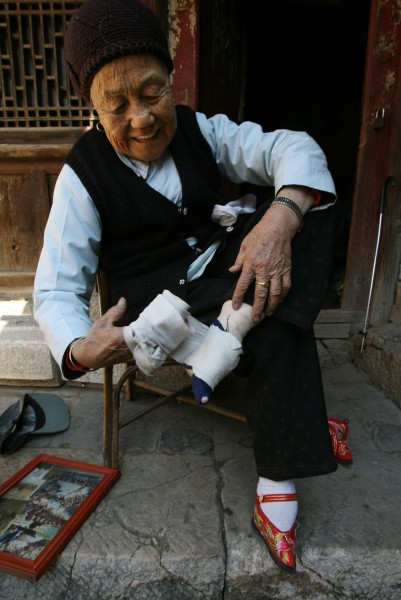
In the tenth century in China, a prince began the practice of foot binding
because he loved the small ‘lily feet’ of his concubine. Thus traditional
Chinese values for over 1000 years dictated that the feet of young girls should
be bound to keep them small. ‘Lily feet’, as they were called, were
thought to be very dainty and beautiful and a symbol of gentility and
high-class. Although the term sounded harmless, it was really very
cruel. It began when a girl was between three and eleven years old.
First her foot was washed in hot water and massaged. Then the child’s toes
were turned under and pressed against the bottom of her foot. The arches
were broken as the foot was pulled straight with the leg, and a long narrow
cotton bandage would be tightly wound around the foot from the toes to the ankle
to hold the toes in place.
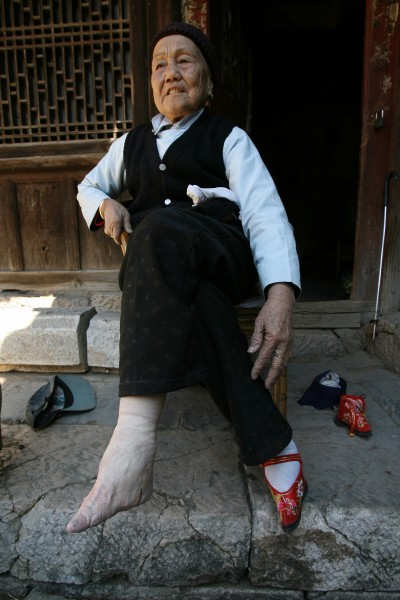
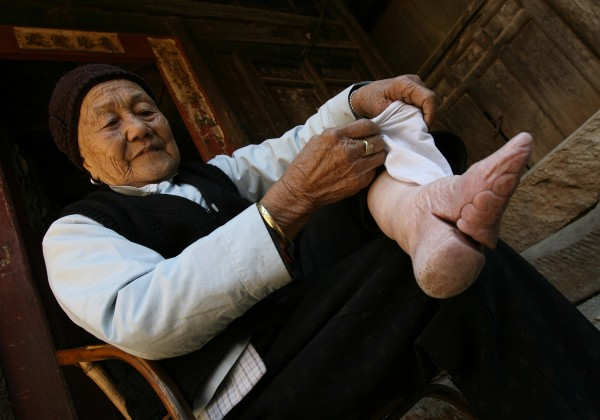
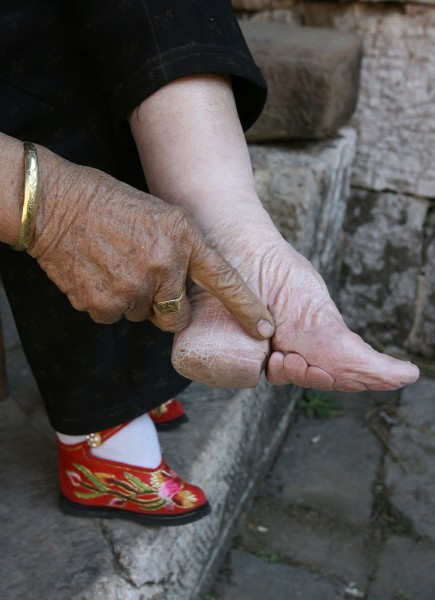
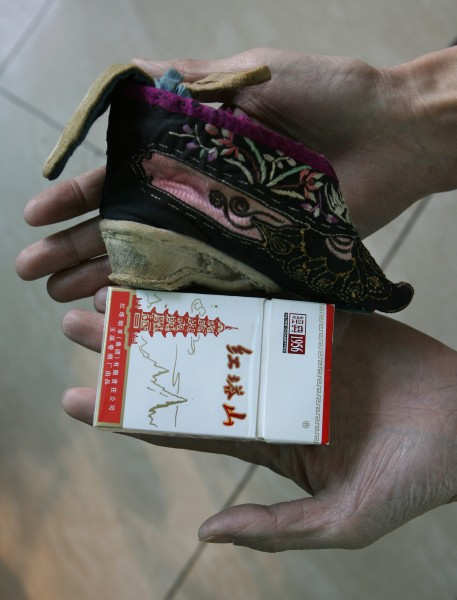
After two or three years, a girl’s feet actually shrank -- until they could
fit into shoes just three inches long. This resulted in feet that were
very deformed and unbearably painful to walk on. Sometimes the toes even
fell off, because blood could no longer reach them. Besides identifying
women of gentility or high-class, it prevented women from “wandering,” since the
women with bound feet were unable to walk unassisted, and even going a short
distance was very painful. These women had to walk with very short mincing
steps and could stand only with great difficulty.
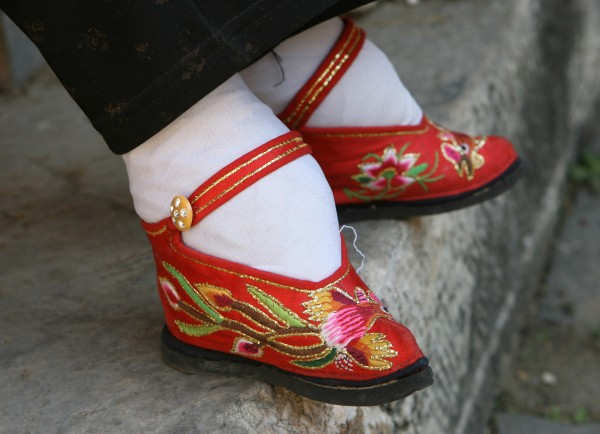
Tiny 3-inch-long shoes, called ‘lotus shoes’, were made of silk and were
beautifully embroidered. In the upper classes in China, a good marriage
would be impossible to arrange if the girl had “big ugly feet.” The practice of
foot binding continued in China for over 1000 years until the Manchu Dynasty was
toppled in 1911 and the new republic was formed. Foot binding was then
outlawed. |
|
|
|
|
|
|
|
|
|
|
|
|
|
|
|
|