|
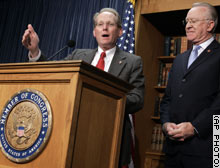
“You should not be relegated to poverty if you work hard and play by the
rules,” said House Majority Leader Steny Hoyer, D-Maryland.
The bill was the second measure passed since Democrats took control of the
House, ending more than a decade of Republican rule.
The measure, which now goes to the Senate, would raise the federal wage
floor by $2.10 from its current $5.15 an hour in three steps over 26 months.
The last increase was in 1997, when President Clinton successfully prodded
the GOP-controlled Congress to enact the increase. Republicans declined to
approve another raise for the six years in which they held majorities in the
House and Senate and President Bush was in the White House.
Organized labor and other supporters pitched the bill as badly needed
assistance for the working poor.
Business groups and other critics said it could lead to higher prices for
goods and services, force small companies to pink-slip existing workers or hire
fewer new ones, and crimp profits.
The White House issued a statement saying it opposed the bill because it
“fails to provide relief to small businesses.”
Senate Democratic leaders have already signaled they will accept changes
designed to shield small businesses from adverse consequences of higher labor
costs.
“This bill increases costs for mom-and-pop businesses,” said Steve Chabot,
R-Ohio, contending the legislation doesn’t do anything to help offset that
burden.
Many businesses want the pot sweetened, perhaps by faster depreciation or
other tax breaks or letting small businesses band together to buy health
insurance for their workers.
The bill would raise the wage floor in three steps. It would go to $5.85 an
hour 60 days after signed into law by the president, to $6.55 a year later and
to $7.25 a year after that.
|