
|
09/17/2009 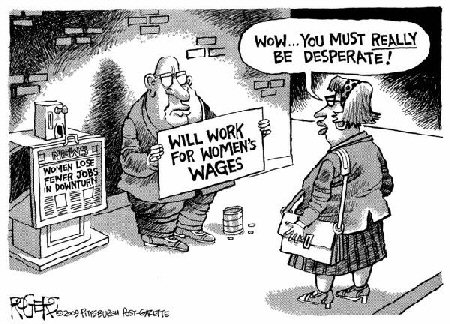 I know this could be a contentious subject because of the two-edged nature of the pay levels between men and women. Still, I have had some definite feelings about the whole thing since the mid 1970s when there was a big push for women to enter the workforce. Except for those jobs that were unionized most women willingly went to work for much less than the male counterparts they were replacing. I can remember countless examples of the men I worked with who complained about their wives going to work and how much it was costing them. They couldn’t convince their wives that by working they were costing the family more money than if they stayed home. The added expense of work clothes (much more expensive for the usual office environment women chose to work in), the extra car, the day care costs, etc. etc. was more than the wages they made. Not to mention the biggest hit —— the added income tax on income they didn’t even enjoy for having to pay for the expenses of working. Other factors, the ones I think bothered them far more, were that women then expected the husband to come home and help do the chores around the house the wife wasn’t doing now that she had a job —— and the mistaken belief that now that the woman was “earning money” too, she could spend even more on home decorating or other frippery. The long term effects were even more evident to anyone paying attention. Eventually employers would lower the wages of all workers to match the low wages women were willing to work for. Fast forward to today and now many families have to have two wage earners because it takes two jobs to equal the pay once earned by one wage earner before. I know that is the simplistic chauvinist explanation and that’s why I mentioned that it was two-edged. Because there have always been women who needed to work to support themselves and their children —— and they have always had to contend with the lower pay they received in comparison to their male counterparts. And it would be ridiculous to assert that the women should stand together and demand better pay when we live in an age when most people have been intimidated or are too ignorant to support the unions that once demanded better pay for everyone. The irony of all this struck home to me when I saw the headline in the toon above —— “Women lose fewer jobs in downturn.” This is true because employers are all too happy to lay off the men who get paid more. Now if we could just get men and women to work together to demand better pay and benefits on the job. Until people give up their prejudices against unions I think they will suffer living with lower pay all around. My real message here is not to excuse men because of the unequal pay, but to point out that it was the employers who took full advantage of the disparity to the detriment of all workers, men and women alike. And too few people seem to understand that. |